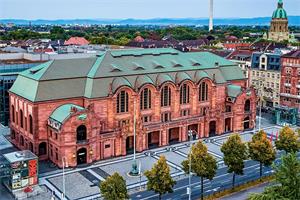
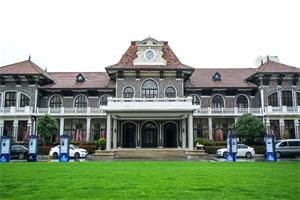
The Shanghai Science Hall (上海科学会堂) is a prestigious academic and cultural venue located in Shanghai, China. Established in 1958, it has long served as a key hub for scientific exchange, academic conferences, and public science outreach in the city and across the country. Known for its blend of classic architecture and modern facilities, the hall plays a vital role in promoting scientific innovation and fostering dialogue among researchers, educators, and the general public.
History & Mission
Founded by the Chinese Association for Science and Technology (CAST) and supported by the Shanghai Municipal Government, Shanghai Science Hall was created to provide a dedicated space for scientists and scholars to hold meetings, discussions, and exhibitions. Its mission is to advance scientific literacy, encourage interdisciplinary collaboration, and support the application of research to societal development.
Over the decades, it has hosted countless influential conferences, lectures, and forums involving leading Chinese and international experts in fields such as physics, chemistry, biology, engineering, information technology, environmental science, and medicine.
Location & Architecture
Situated in the heart of Shanghai’s downtown Luwan District (now part of Huangpu District), the Science Hall is adjacent to cultural landmarks like People’s Park and Nanjing Road, making it easily accessible and surrounded by a vibrant urban environment.
The complex features a mix of French Renaissance–style architecture and modern extensions. Its elegant facades, spacious gardens, and classical detailing reflect the historical charm of mid‑20th‑century Shanghai, while interior renovations have introduced state‑of‑the‑art conference and exhibition technologies.
Facilities
Shanghai Science Hall offers a wide range of versatile spaces designed for different types of events:
- Grand Auditorium: A large lecture and conference hall with tiered seating, professional lighting, and advanced audiovisual systems, suitable for keynote speeches, academic symposiums, and award ceremonies.
- Multi‑Function Halls: Several medium and small conference rooms equipped with simultaneous interpretation systems, video conferencing tools, and flexible seating arrangements.
- Exhibition Areas: Galleries and open halls for science and technology exhibitions, innovation showcases, and art‑science crossover events.
- Garden Courtyards: Scenic outdoor spaces ideal for networking receptions, book launches, and informal discussions.
- Support Facilities: On‑site catering, VIP lounges, media rooms, ample parking, and barrier‑free access for persons with disabilities.
Key Events & Activities
Throughout the year, the hall organizes and hosts:
- Academic Conferences: National and international scientific congresses, disciplinary forums, and cross‑industry research meetings.
- Public Lectures & Science Popularization: Talks and interactive sessions aimed at students, professionals, and the general public to raise awareness of scientific advances and critical issues.
- Innovation Exhibitions: Displays of cutting‑edge research, prototypes, and achievements from universities, research institutes, and high‑tech enterprises.
- Cultural & Interdisciplinary Events: Blending science with literature, philosophy, and the arts to inspire creative thinking and broaden public engagement.
Many events are co‑organized with CAST branches, universities (e.g., Fudan University, Shanghai Jiao Tong University), research academies, and international scientific bodies.
Impact & Reputation
Shanghai Science Hall is recognized as one of China’s most important science communication and academic exchange platforms. It has contributed significantly to the development of Shanghai as a global center for science and technology, facilitating collaborations that link basic research with industry and policy.
The hall also plays a strong role in nurturing young talent, hosting competitions, workshops, and mentorship sessions for students and early‑career researchers.
Modern Development
In recent years, the Science Hall has embraced digital transformation, offering hybrid and virtual event capabilities so that participants from around the world can join remotely. Sustainability initiatives have been introduced to reduce energy consumption and promote environmentally friendly practices in event management.
© Copyright notes
The copyright of the article belongs to the author, please do not reprint without permission.